Standard biometrics are vulnerable, but 2026-grade liveness detection blocks deepfakes by analyzing micro-movements, blood flow patterns, and light reflections. Multi-modal systems (e.g., face + behavior) are the strongest line of defense against synthetic identity fraud.
Updated by 03.17.2026
How Biometric Authentication Will Change in 2026
Biometric authentication is everywhere, and it’s no longer limited to unlocking smartphones. It now plays a direct role in protecting financial transactions, digital identity systems, and sensitive data across industries. The future of biometric authentication extends beyond fingerprints and facial recognition. By 2026, systems will operate as intelligent, risk-based security engines.
E-Complish provides secure payment processing solutions for utilities, healthcare, and financial institutions nationwide. As a PCI and HIPAA-compliant Level 1 provider, we understand that robust identity verification is the backbone of modern fraud prevention and digital trust.
How AI Fraud Has Redefined Biometric Risk
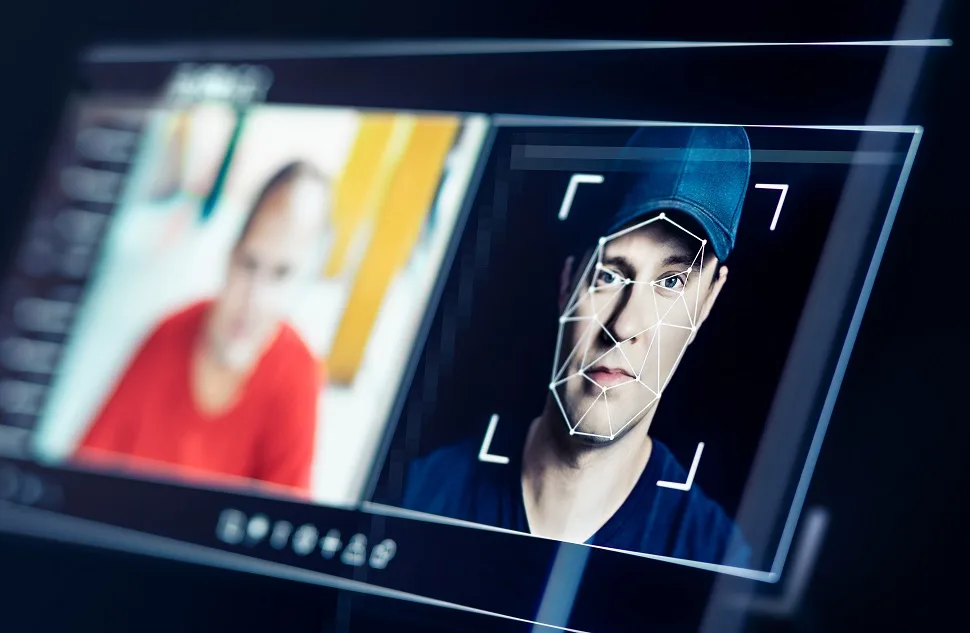
The main risk to biometric authentication is no longer stolen credentials. Artificial intelligence now creates synthetic identities and deepfake media that can bypass outdated biometric systems. Fraud exposure also increases operational risk tied to payment processing fees, especially in high-volume transaction environments.
Key data points shaping 2026:
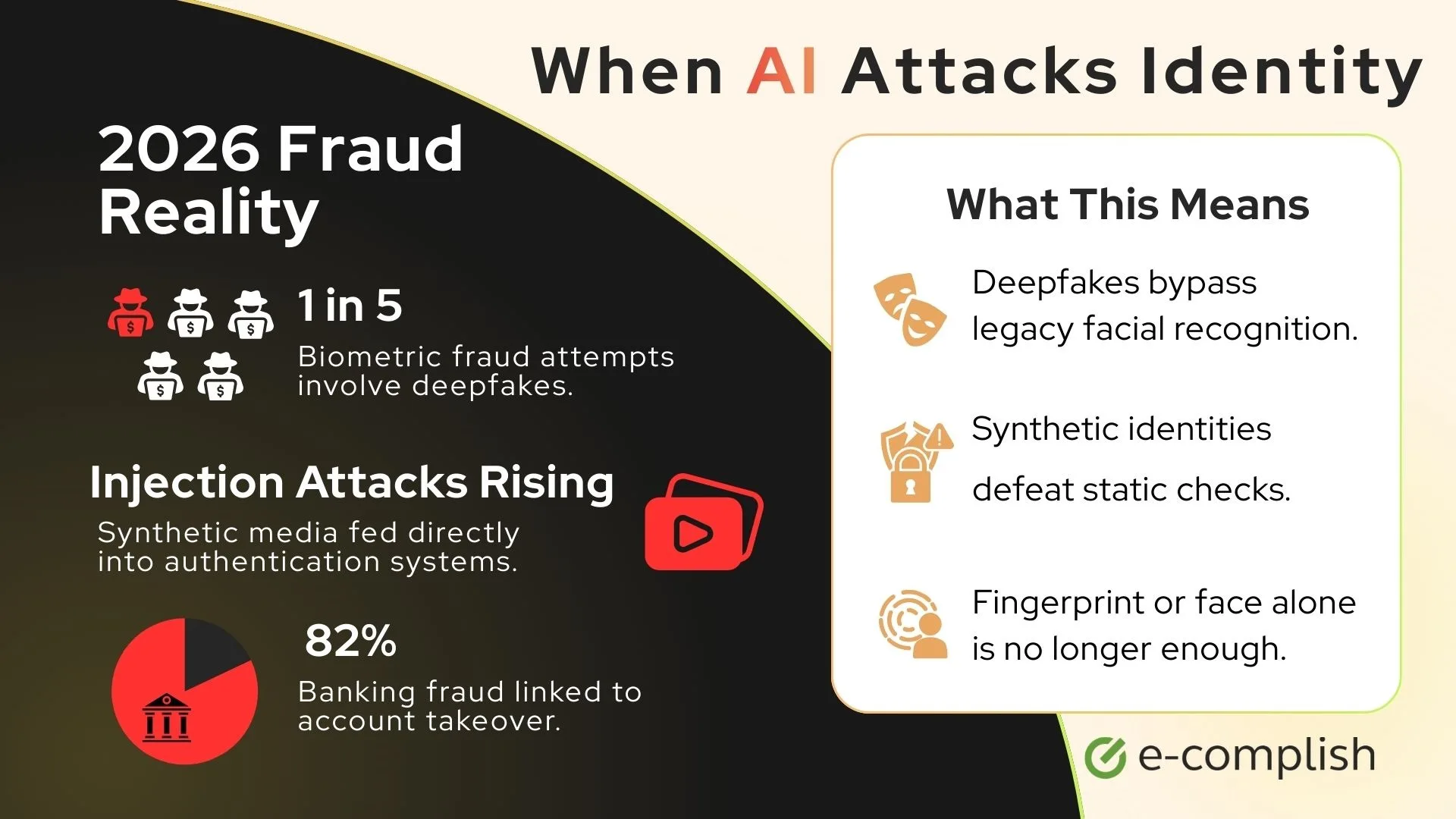
- 1 in 5 biometric fraud attempts now involve deepfakes.
- Injection attacks are rising annually.
- 82% of fraud in banking and payments is linked to account takeover.
According to the 2026 Entrust Identity Fraud Report, one in five biometric fraud attempts involves deepfake manipulation. Injection attacks, where synthetic media is fed directly into authentication APIs, are also increasing annually.
The Federal Bureau of Investigation has also warned about synthetic identity fraud trends affecting financial institutions.
Liveness Detection and Anti-Deepfake Controls Are Standard
Passive liveness detection is now a baseline requirement. Modern biometric systems evaluate micro-movements, depth mapping, and light reflection patterns that artificial media cannot replicate.
A three-layer defense model is becoming common:
- Presentation Attack Detection (PAD)
- Injection Attack Protection
- Combined device + biometric confirmation
Zero-knowledge biometric verification is also gaining popularity. This model verifies identity without exposing raw biometric data to relying parties.
These developments align with regulatory frameworks such as:
In many jurisdictions, biometric data is legally classified as sensitive data. Data exposure can create long-term risk because biometric templates cannot be reset like passwords.
Authentication Now Runs Continuously
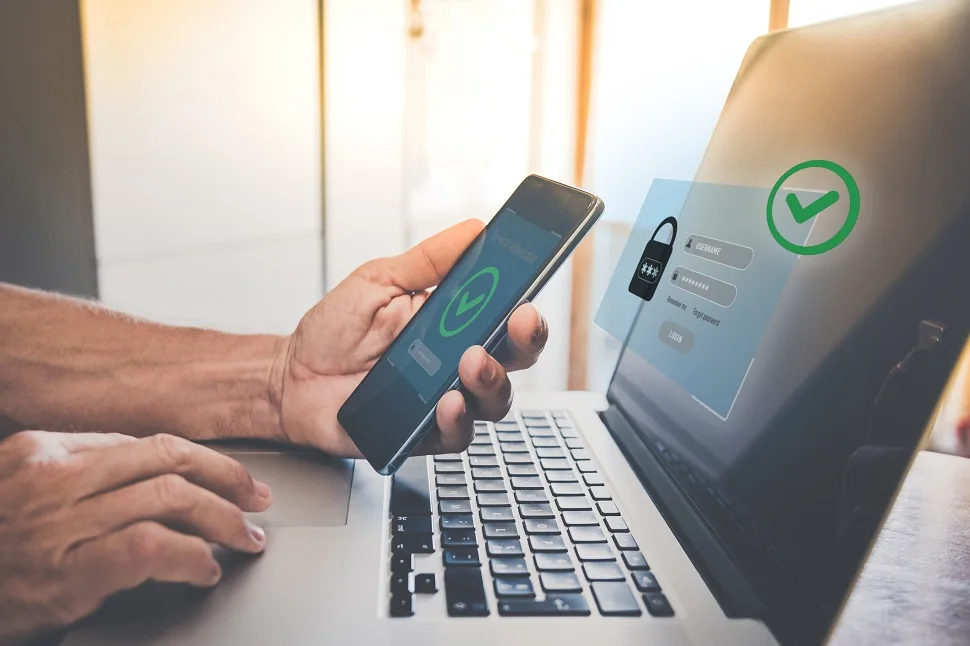
Traditional authentication treats login as the security boundary. However, this model fails to address modern fraud patterns.
Behavioral biometrics provide continuous authentication by analyzing:
- Typing cadence
- Mouse trajectory
- Touch pressure
- Scroll behavior
- Login timing
This continuous model is particularly relevant for recurring billing environments where identity must remain verified across ongoing transactions. The behavioral biometrics market is projected to reach $4.26 billion by 2027, with AI integration increasing accuracy by 47.3%.
This approach aligns with NIST SP 800-207 Zero Trust Architecture. Zero trust principles require continuous verification rather than one-time login approval. If behavioral patterns deviate, step up authentication activates automatically.
This is one of the defining features of the biometric authentication future.
Stop Account Takeovers Before They Start
E-Complish delivers a secure payment infrastructure designed to support continuous, risk-based identity verification.
Passwordless Authentication Replaces SMS Codes
Passwords contribute to 81% of data breaches. SMS one-time codes remain vulnerable to SIM swapping and phishing.
The 2026 authentication stack replaces:
- Static passwords with passkeys (FIDO2 standard)
- SMS codes with biometric confirmation
- Per-application credentials with unified digital identity wallets
The FIDO Alliance promotes phishing-resistant authentication frameworks based on public key cryptography. Microsoft reported an 87% cost reduction after deploying passwordless authentication.
This structure also supports embedded payment environments where authentication must operate seamlessly inside digital services.
Decentralized Identity Changes Who Controls Biometric Data
Biometric templates are permanent identifiers. Unlike passwords, they cannot be replaced.
The European Union’s eIDAS 2.0 Regulation mandates digital identity wallets for citizens, enabling the storage of identity credentials and biometric proofs under user control.
This model supports decentralized identity and self-sovereign identity frameworks. Rather than transmitting raw biometric data, systems validate encrypted credentials. Similar pilot programs are underway in several U.S. states, which marks a global movement toward decentralized identity systems.
AI Agents Now Require Identity Verification
Identity systems are no longer only applicable to human users. There are 144 non-human identities for every human identity in enterprise environments, with AI agent identities growing 44% year-over-year. The emerging Know Your Agent (KYA) framework requires that automated systems and AI agents accessing sensitive systems be traceable to a verified human authorizer.
For payment processors and financial institutions, every automated request tied to financial transactions must be auditable and identity-bound.
Will Biometric Authentication Methods Be Useful in the Future?
Yes, but only as part of layered identity systems. Standalone fingerprint or facial recognition checks aren’t enough. The future of biometric authentication will focus on intelligent identity systems that balance seamless access with stronger security. Organizations that continue relying on legacy systems and static authentication models will face growing exposure to identity fraud and AI-powered attacks.
E-Complish supports secure, compliant payment processing solutions designed for high-volume and regulated industries. To discuss how advanced authentication strategies can strengthen your payment infrastructure and digital services, contact us today.
Table of Contents
Frequently Asked Questions
Can biometric authentication be spoofed by AI or deepfakes?
Is biometric data safer than passwords?
Yes. Passwords are easily phished or stolen in bulk. Biometrics are unique to the user and, in modern systems, are stored as encrypted mathematical templates, not raw images. In other words, they’re nearly impossible to reverse-engineer or reuse if intercepted.
What is the difference between active and passive liveness detection?
Active liveness detection requires the user to perform a specific action, such as blinking, nodding, or following a prompt on the screen, to prove they are a real person. In contrast, passive liveness detection operates invisibly in the background by using AI to analyze skin texture, light reflection, and depth mapping without requiring any user interaction. Passive detection is the preferred standard for 2026 because it provides a frictionless user experience while offering superior protection against sophisticated AI-generated deepfakes.
Does biometric authentication comply with BIPA and GDPR?
Yes, as long as the system uses Privacy-by-Design. Key requirements include explicit user consent, encrypted template storage, and decentralized data models where biometric proofs stay on the user's device rather than a central database.
What are behavioral biometrics?
Behavioral biometrics analyzes how you interact with a device, such as typing rhythm, swipe patterns, and mouse movement. Unlike fingerprints, these traits provide continuous authentication, ensuring the user is still the same person throughout the session.
Will biometrics completely replace SMS OTPs?
By 2026, the industry is moving toward Passwordless (FIDO2/Passkeys). Biometrics are faster and more secure than SMS codes, which are vulnerable to SIM swapping and phishing. Most regulated industries now prioritize biometrics over SMS for high-value transactions.
Table of Contents

Marc Hopkins
Groomed in the credit and collection industry since 1990, Marc quickly advanced into credit and collection management with a large…